
A Personal Reflection on Surveillance, Technology, and the Future We’re Racing Toward
We live in a world where the line between safety and surveillance has thinned to a thread.
Everywhere we go, a lens is watching. At work, cameras track our movements. In stores, they follow us down every aisle. They hang from streetlights, guard the entrances of commercial buildings, and watch the traffic flowing through our cities. Even at home — the one place we instinctively believe is private — cameras sit quietly on our laptops, our desktops, our doorbells, and our phones.
And then there are the devices that listen.
Smart speakers waiting for “Hey Google” or “Alexa.” Phones that perk up at the sound of our voice. Home assistants that promise convenience but require constant vigilance. We’ve invited technology into our most intimate spaces, and in doing so, we’ve opened doors we can’t easily close.
For years, I found myself asking the same question many people quietly wrestle with:
Are we losing our privacy, or have we already lost it?
That question — and the unease behind it — became the spark that ignited Veil of Dawn’s Promise.
The Fear Behind the Revolution
We’re living through a technological revolution unlike anything humanity has ever seen. Artificial intelligence is no longer a distant concept reserved for science fiction; it’s embedded in our phones, our cars, our homes, our workplaces, and increasingly, our decision‑making.
And with that revolution comes fear.
Fear that AI will take our jobs. Fear that AI will replace human creativity. Fear that AI will become uncontrollable. Fear that AI will end humanity as we know it.
I watched these fears grow louder every year — in the news, in conversations with friends, in online debates, in the quiet worries people rarely say out loud. And I began to wonder:
Is AI really the threat? Or is the true danger the people who control it?
That question changed everything for me.
The Birth of a Story
Veil of Dawn’s Promise didn’t begin as a plot. It began as a thought experiment.
I asked myself what would happen if the world continued down its current path — more cameras, more listening devices, more data collection, more automation, more AI woven into the fabric of everyday life. What would happen if the wrong people gained control of that technology? What would happen if surveillance wasn’t just a tool, but a weapon? What would happen if privacy wasn’t simply eroded, but engineered out of existence?
And most importantly:
What would happen to humanity when technology becomes the perfect instrument for control?
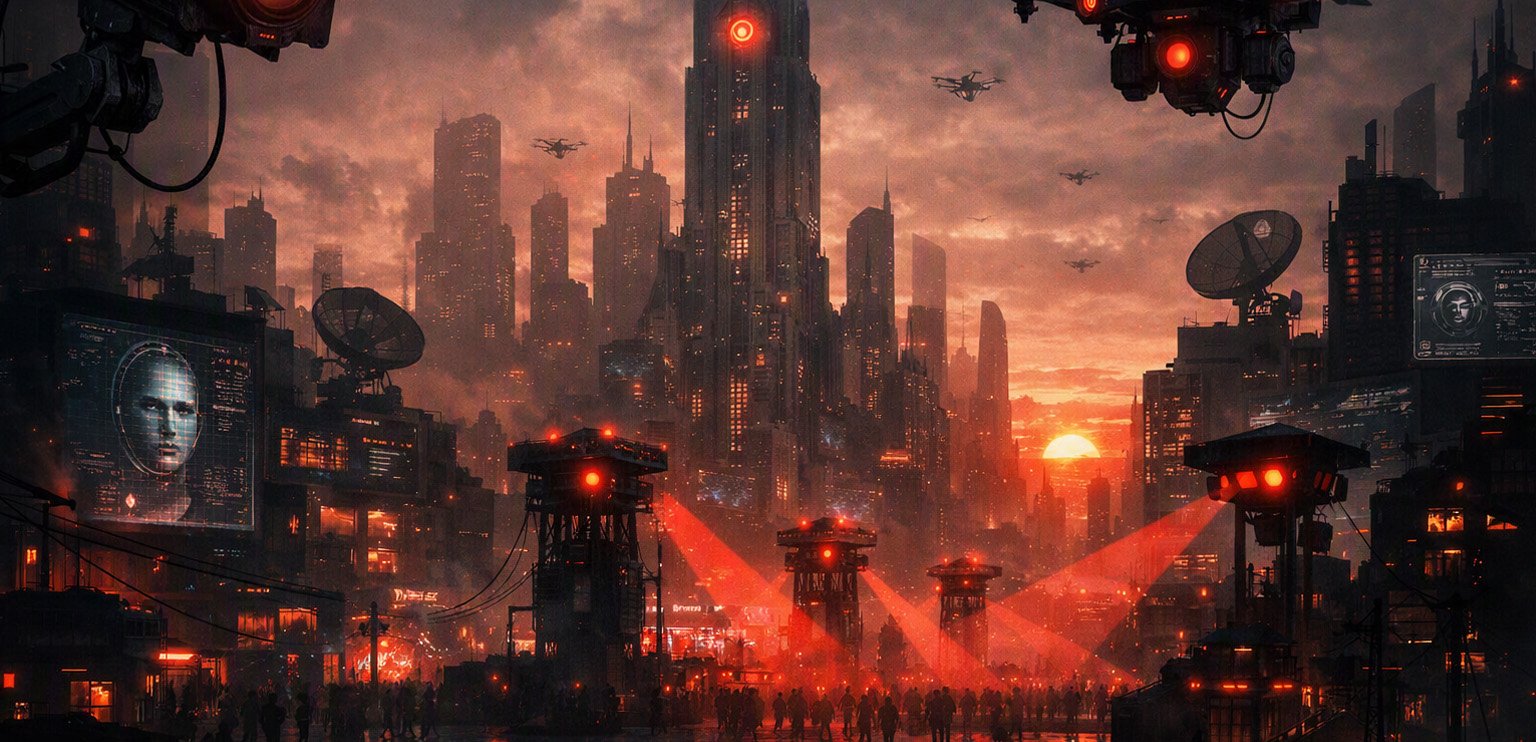
From those questions, the world of Cyronis emerged — a megacity where surveillance is architecture, where AI governs every corner of life, and where truth itself is filtered through systems designed to keep citizens compliant.
But I didn’t want to write a story about evil machines.
I wanted to write a story about bad actors — the humans who manipulate technology for power, control, and dominance. Because technology, on its own, is neutral. It doesn’t choose sides. It doesn’t have motives. It doesn’t wake up one morning and decide to oppress people.
People do.
And that became the beating heart of the novel.
Why This Story Matters to Me
I wrote Veil of Dawn’s Promise because I believe we’re standing at a crossroads.
On one path, technology becomes a tool that empowers humanity — helping us solve problems, expand our capabilities, and build a better future.
On the other path, technology becomes a cage — one we willingly step into, one we may not realize we’re trapped in until the door locks behind us.
The difference between those two futures isn’t the technology itself.
It’s the people who wield it.
I wanted to explore that tension through a story that feels thrilling, emotional, and deeply human. A story where the protagonist isn’t fighting machines — she’s fighting the systems, the lies, and the people who built them. A story that reflects our world today, but pushes it forward just enough to show where we might be headed if we’re not careful.
A Warning, a Hope, and a Promise
t its core, Veil of Dawn’s Promise is a warning — a reminder that privacy is fragile, that freedom can be engineered away, and that technology can become dangerous when placed in the wrong hands.
But it’s also a hope.
A hope that humanity can still choose the right path. A hope that we can question the systems around us. A hope that we can reclaim agency in a world that feels increasingly monitored and controlled.
And it’s a promise — that as long as we continue to ask hard questions about the future, we still have the power to shape it.
Why I’m Sharing This Now
Readers often ask where the idea for Veil of Dawn’s Promise came from. The truth is that it came from the same place many of our fears come from: the world right outside our front door.
I wrote this novel because I believe stories can help us confront uncomfortable truths. They can help us imagine futures we want to avoid — and futures we want to build. They can help us see the consequences of our choices before those consequences become reality.
And if my story encourages even one person to think more critically about the technology around them, then I’ve done what I set out to do.
Joe Sarkic writes award‑winning grimdark fantasy and science fiction, crafting atmospheric tales of haunted realms, fractured megacities, and the people who survive them. Step into Veil of Dawn’s Promise and Necrocracy: Forsaken Guardian to explore worlds where both sorcery and technology demand a price.
Join My World