
Why Readers Confuse Them — and What Truly Sets Them Apart
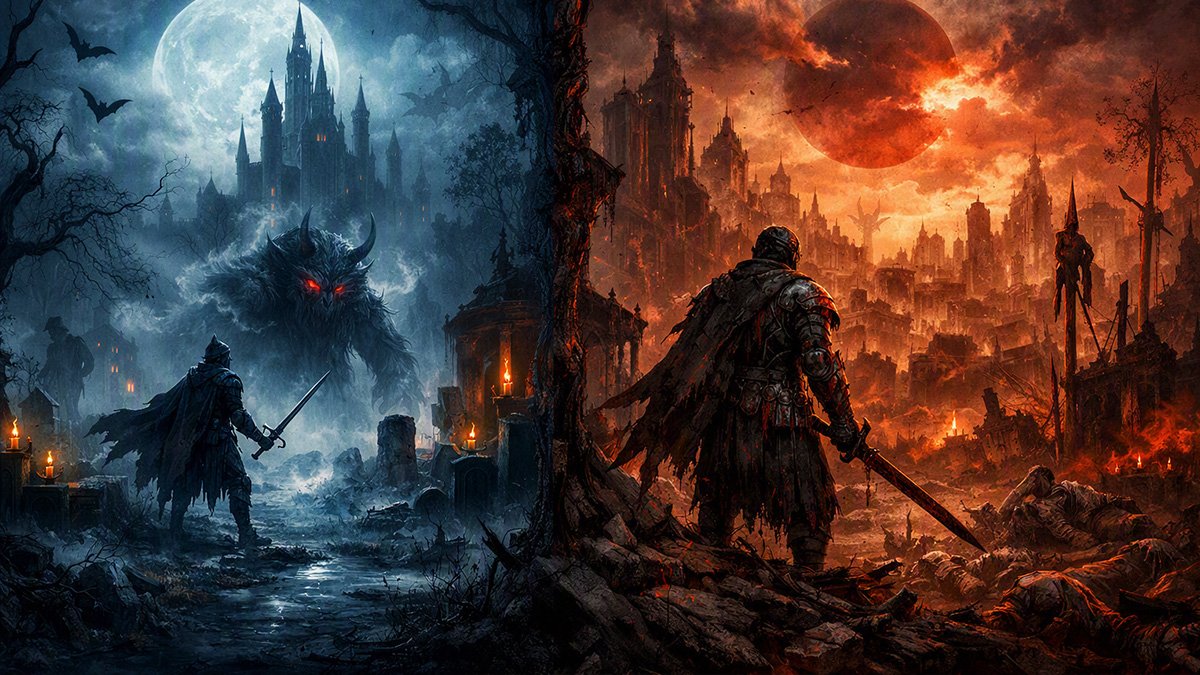
Fantasy has always been a genre of wonder—soaring magic, impossible worlds, heroes rising against the odds. But not all fantasy is built from light. Some stories descend into shadow, exploring the monstrous, the tragic, and the morally complex. Two subgenres dominate this darker territory: Dark Fantasy and Grimdark Fantasy.
Readers often treat them as interchangeable. Writers sometimes blur the line. Bookstores shelve them together.
But they are not the same.
As an author who writes in the bleeding edges of these genres, I see this confusion constantly. Understanding the distinction helps readers find the stories they crave—and helps authors shape the tone, stakes, and worldview of their worlds with absolute precision.
Let’s break it down.
What Is Dark Fantasy?
Dark Fantasy is fantasy where darkness intrudes upon the world, but the world itself is not necessarily broken.
Core Traits of Dark Fantasy:
- Supernatural horror woven into fantasy.
- Monsters, demons, curses, forbidden magic.
- A sense of dread or looming threat.
- Heroes who struggle against the darkness.
- Worlds that still contain hope, beauty, or moral clarity.
The Key Idea: Dark Fantasy is about the presence of darkness. It’s fantasy with horror elements.
Examples:
- The Witcher
- The Sandman
- The Poppy War (early books lean dark fantasy before shifting tone)
Reader Experience: Dark Fantasy feels eerie, unsettling, atmospheric. It’s the chill of a curse, the whisper of a demon, the shadow in the corner of the room.
What Is Grimdark Fantasy?
Grimdark is fantasy where the world itself is corrupt, cruel, and morally collapsed—and everyone inside it is shaped by that decay. It subjects the conventions of epic fantasy to the scrutiny of stark, physical realism.
Core Traits of Grimdark Fantasy:
- Morally grey or compromised characters.
- Systems of power that are oppressive or indifferent.
- Violence and magic with severe, somatic consequences.
- A pragmatic, survival-focused worldview.
- Morality is not neatly categorized, and doing the “right” thing carries a devastating cost.
The Key Idea: True grimdark is not nihilism. It is about the absolute cost of meaning. The darkness acts as a pressure that forces characters to work harder for whatever hope they find.
Examples:
- The First Law Trilogy
- The Black Company
- Warhammer 40K
- The Broken Empire
Reader Experience: Grimdark feels brutal, cynical, and unflinchingly human. It’s the taste of blood, the weight of betrayal, the physical toll of power.
The Clean Distinction
Here’s the simplest way to understand the difference:
- Dark Fantasy = Fantasy with horror.
- Grimdark Fantasy = Fantasy with consequence.
Dark Fantasy asks: “What if the darkness comes for us?” Grimdark asks: “What if the darkness is already inside us?”
Dark Fantasy still allows for traditional heroes. Grimdark compromises its heroes, forcing them to navigate a world where evil is not a separate category from the people fighting it. Dark Fantasy worlds can be saved. Grimdark worlds demand that survival is a debt paid in bone.
Why Readers Confuse Them
Despite their differences, readers often treat Dark Fantasy and Grimdark as the same. Here’s why:
- Both Are “Dark”: The word dark is doing a lot of heavy lifting. If a story has violence, monsters, or bleak moments, readers may lump it into the same category.
- Both Reject Traditional Heroism: Neither subgenre embraces the classic “chosen one” narrative. Readers see antiheroes and assume “grimdark.”
- Both Use Gritty Aesthetics: Ruined cities, cursed forests, blood-soaked battlefields—visually, they overlap.
- Marketing Often Blurs the Line: Publishers use “dark fantasy” as a catch-all term because it’s more marketable than “grimdark,” which can intimidate casual readers.
- Many Books Blend Both: Some stories begin as Dark Fantasy and slide into Grimdark. Others use Grimdark tone but Dark Fantasy tropes.
My own work—Necrocracy: Forsaken Guardian—sits firmly in grimdark, but uses dark fantasy aesthetics like Void demons and ritual magic. This hybrid nature, which I explicitly classify as “Incantatory Dark Fantasy / Grimdark,” is exactly why readers often conflate the genres.
How to Tell Them Apart (Fast)
Here’s a quick diagnostic:
- If the world is haunted → Dark Fantasy.
- If the world is corrupt → Grimdark.
- If characters are morally grey → Could be either.
- If morality requires devastating compromise → Grimdark.
- If horror is the threat → Dark Fantasy.
- If humanity/institutions are the threat → Grimdark.
- If hope exists freely → Dark Fantasy.
- If hope must be bought with suffering → Grimdark.
Why the Distinction Matters
For Readers: Knowing the difference helps them find the exact flavor of darkness they enjoy. Some want monsters. Some want moral collapse. Some want both.
For Authors: Tone is branding. If you write grimdark, readers expect harsh consequences, systemic corruption, moral ambiguity, and bleak realism. If you write dark fantasy, readers expect supernatural horror, eerie atmosphere, dangerous magic, and heroic struggle. Mislabeling can lead to disappointed readers—or the wrong audience entirely.
Where Necrocracy Fits
My novel, Necrocracy: Forsaken Guardian, is a grimdark fantasy with dark fantasy ritualism.
It’s not just “fantasy with horror.” It’s grimdark at its core—a world built from decay, power imbalance, and agonizing somatic costs, wrapped in the aesthetics of ritual magic, Void demons, and ruined bastions. When wielding reality-warping magic exacts a physical toll—like crushing chest pressure or drawing directly from one’s own life force—it cements the work in stark physical realism. This makes it a perfect example of how the genres can overlap without being identical.
Final Thoughts
Dark Fantasy and Grimdark Fantasy share the same shadows—but they cast them differently.
Dark Fantasy explores fear. Grimdark explores consequence. Dark Fantasy asks what lurks in the dark. Grimdark asks what the dark has already done to us.
Understanding the difference doesn’t just help categorize stories—it helps us appreciate the full spectrum of darkness that fantasy can offer.
Joe Sarkic writes award‑winning grimdark fantasy and science fiction, crafting atmospheric tales of haunted realms, fractured megacities, and the people who survive them. Step into Veil of Dawn’s Promise and Necrocracy: Forsaken Guardian to explore worlds where both sorcery and technology demand a price.
Join My World