
Crafting Organic Time and Distance in Dark Fantasy
Writing Necrocracy: Forsaken Guardian was an exercise in unlearning. With my background in physics and computer science, my brain is naturally wired to map environments using precise, clinical math. But early in the drafting process—usually somewhere between my third cup of coffee and stepping away for a heavy training split—I would read back a tense scene and realize the immersion was breaking. Dropping a modern Earth measurement into the prose, like an “hour” or a “meter,” instantly shattered the dark fantasy illusion I was working so hard to build.
In a world governed by visceral survival, reality-editing Smithing magic, and ancient horrors, objective math simply has no place. The setting required an atmosphere that felt heavy, archaic, and organic. I realized that to fully trap the reader in the grueling reality of my characters, I had to completely purge the metric and imperial systems from the manuscript. Instead, the world had to be mapped entirely through grit, biological vibration, and atmospheric shifts rather than flat exposition.
Here is a look into my worldbuilding process, and how I forced myself to rebuild time and distance from the ground up.
The Lowercase Rule
When I was staring down chapter revisions, I noticed something frustrating. It is incredibly tempting in fantasy worldbuilding to capitalize all your custom lore, treating every specific measurement as a Proper Noun. But every time I capitalized “Cycles” or “Leagues” in a draft, the words jumped off the page like neon signs, completely distracting from the gritty, incantatory atmosphere I was trying to maintain.
I realized that treating measurements as titles broke the immersion. So, I added a hard mandate to my Story Bible: all formal fantasy units of time and distance had to be strictly lowercase. By keeping words like spans, leagues, and sun-paths uncapitalized, they blended seamlessly into the text, matching modern fantasy standards. The only times I allowed myself to break this rule were for formal celestial events, like a Blue Harvest Moon, or massive historical epochs like a Great Passing.
Measuring Distance: Scrapping the Floor Plan
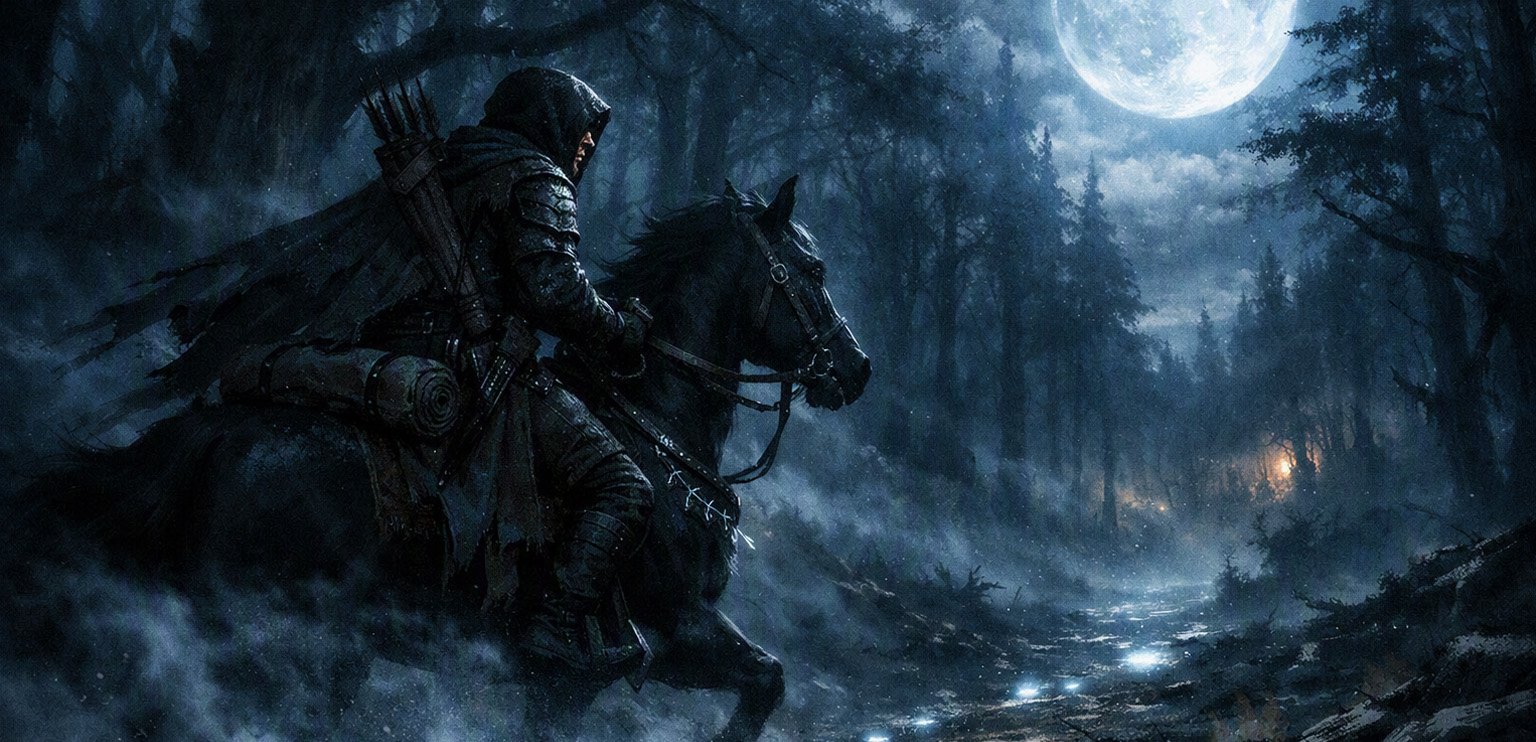
ith my background in exact sciences, my first instinct is always to lay out a scene like an architectural floor plan. I want to know exactly how many feet separate the Ranger from the Orc. But human beings—especially in a brutal, survival-focused setting—do not measure the world with a ruler.
I had to actively scrap my clinical spatial mapping and replace it with what I started calling “Somatic Grounding”. The world had to be measured by the physical toll it took on the characters:
Hand-spans and Paces: When a character is locked in melee combat, I restricted the measurements to their immediate physical reach. A blade hovers a hand-span away; a warrior retreats two paces. It keeps the camera claustrophobically tight.
Leagues: When tracking long, grueling travel across broken terrain, I banished words like “miles.” I used leagues because it naturally implies distance measured through exhaustion and worn boots.
| Fantasy Unit | Earth Equivalent | Context & Usage |
| span / hand-span | ~9 inches (23 cm) | Used for extreme close-quarters, weapon proximity, and micro-movements. |
| pace / stride | ~2.5 feet (0.76 m) | Used to regulate movement, footfalls, and immediate combat spacing. |
| hilt-reach | ~3 feet (0.9 m) | Used primarily for melee weapon engagement distances. |
| stone’s throw | ~150 feet (45.7 m) | Defines short-range projectile distances or the perimeter of a camp. |
| league | ~3 miles (4.8 km) | Used to calculate exhausting, long-range travel across broken terrain. |
| horizon | ~12 leagues (58 km) | Used for vast, sweeping geographical scale. |
Measuring Time: Hunting Down the Clocks
Real-world clocks imply a safe, industrialized society. Necrocracy is anything but. During my editing passes—which usually turned into ruthless audits of my own manuscript—I found myself constantly hunting down and purging rogue words like “seconds,” “hours,” or “centuries” that had subconsciously slipped into the prose.
I forced myself to replace mechanical time with biological and celestial rhythms:
The Visceral Beat: A quick, violent action wasn’t a second; it was a pulse or a heartbeat. A tense, agonizing wait was measured in breaths.
The Macro Scale: For longer durations, I tied the pacing directly to the environment. Days became sun-paths, and years became cycles. When dealing with ancient, deep-lore history, I measured time in turnings or Great Passings, which gave the setting a much heavier, primordial weight.
| Fantasy Unit | Earth Equivalent | Context & Usage |
| pulse / heartbeat | ~1 second | Measures immediate, visceral action beats and sudden magical anomalies. |
| breath | 5–10 seconds | Used for tense standoffs, casting rhythms, and physical recovery. |
| candle-mark | Hourly equivalent | Tracks the prolonged pacing of a siege or battle in the dark. |
| sun-path | 1 day | References the daily transit and passage of the sun. |
| cycle | 1 year | Used to track ages, winters, and near-history. |
| passing | ~10 cycles | A macro-time unit for generational shifts. |
| turning | 10–100 cycles | Measures deep history and the weight of ancient eras. |
| great passing / turning | 100–500+ cycles | The massive epochs that define the oldest lore of the world. |
The Somatic Anchor: The “Blindfold Rule”
Ultimately, the decision to banish modern metrics wasn’t just a vocabulary swap—it was a mechanism to enforce flawed subjectivity.
To make this work, I instituted a “Blindfold Rule” for myself as a writer: the characters had to experience the world through their nervous systems first. Before a character could visually confirm a threat, they had to feel the drop in temperature, taste the copper tang of magic in the air, or feel the ache in their marrow.
By forcing the prose to rely on paces and heartbeats rather than meters and minutes, I took away my own ability to cheat with objective, omniscient summaries. I trapped myself in the same visceral, exhausted reality as my characters—and as a result, I trapped the reader there, too.
By forcing the prose to rely on paces and heartbeats, the reader is trapped in the same visceral, exhausted reality as the characters.
The Final Anvil
Building the world of Necrocracy: Forsaken Guardian wasn’t just about drafting a map or inventing a magic system where a sentient blade can physically edit reality. It was about forging an atmosphere that felt unyielding. By enforcing these strict rules of somatic measurement and stripping away clinical perfection, I was able to find that raw, human signature—a style that became the foundation for this “Incantatory Grimdark” experience. It forced me to put down the ruler and feel every pulse and pace alongside my characters.
I hope this behind-the-scenes look helps you in your own worldbuilding journeys, whether you are outlining a new grimdark epic or just trying to ground your prose in a more visceral reality. The next time you catch yourself writing that a character waited “for three hours,” try putting a blindfold on your narrator and asking them what their body feels instead.
Until the next cup of coffee and the next chapter revision,
Keep forging ahead,
Joe Sarkic
Joe Sarkic writes award‑winning grimdark fantasy and science fiction, crafting atmospheric tales of haunted realms, fractured megacities, and the people who survive them. Step into Veil of Dawn’s Promise and Necrocracy: Forsaken Guardian to explore worlds where both sorcery and technology demand a price.
Join My World