
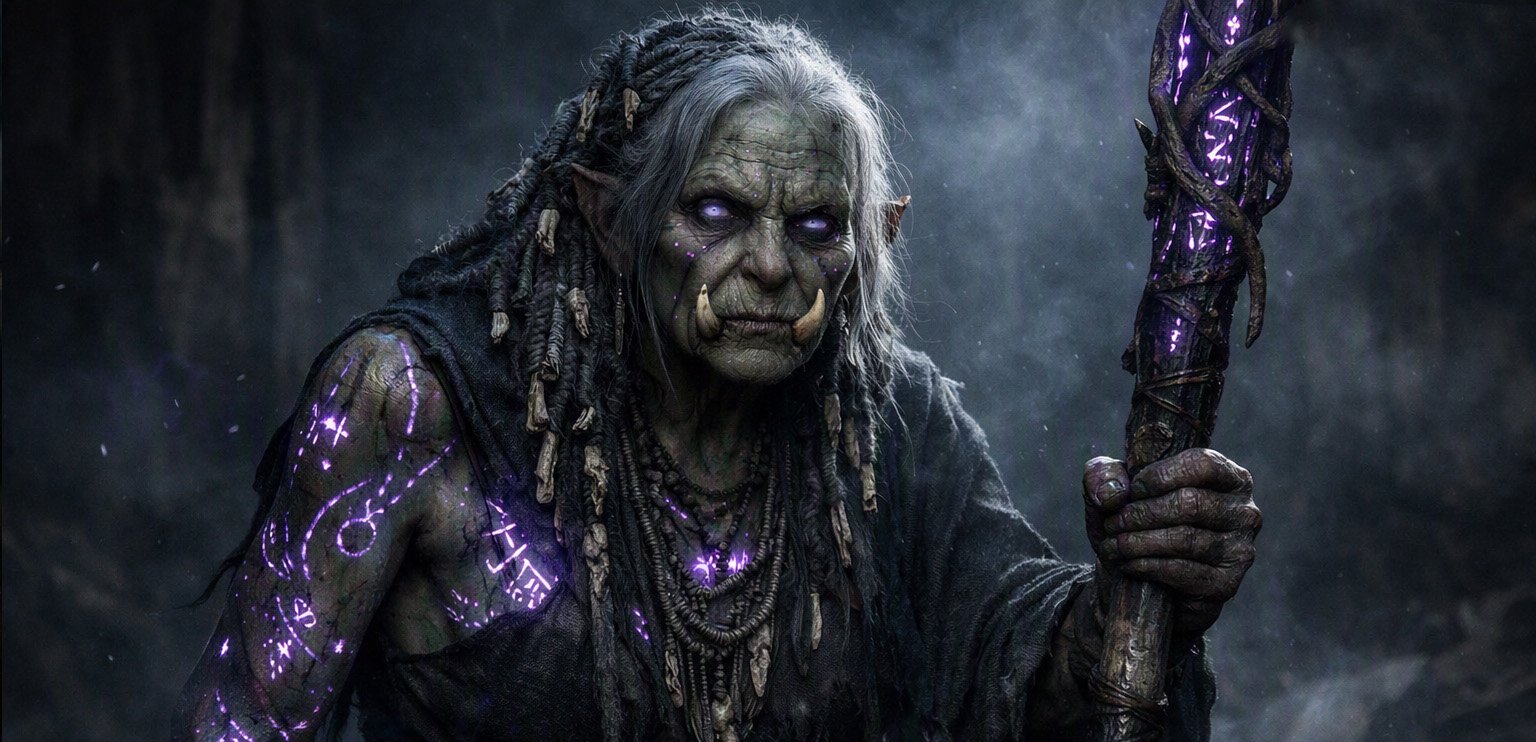
In the dark fantasy universe of Necrocracy, magic is rarely a clean, external tool; it is a physical and biological debt. While common spellcasters and lesser practitioners dabble in the superficial elements of death, true mastery belongs to the rare and terrifying class known as Boneweavers.
Far more than simple mages or warriors, Boneweavers operate as the architects, oracles, and supreme authorities of the dark world.
The Fundamental Distinction: Necromancers vs. Boneweavers
To understand a Boneweaver, one must first understand what they are not.
Necromancers (The Puppeteers): Lesser practitioners who view death as a resource to be exploited externally. Necromancers wear their power on their clothing—their black robes are heavily stitched with crude, chaotic, white sigils that writhe like worms during casting. They force a “false spark” into a corpse to make it twitch, relying on external rituals, blood sacrifices, and ambient death to fuel their dominance. They are viewed by true masters as cowards who pilot the dead like men whipping a mule.
Boneweavers (The Architects): They are the power. Rather than wearing external symbols, a Boneweaver bears their sigils—the silver constellations of the inner circle—etched directly into their living flesh and bone, glowing with an internal violet light. They do not just animate corpses; they manipulate the physical reality of anatomy itself.
Why Boneweavers are a Superior Class
Boneweavers represent the absolute pinnacle—and the most terrifying evolution—of death-magic. They outclass traditional necromancers through several distinct tiers of power:
Architectural Revision: While a Necromancer sees a skeleton and views a temporary soldier, a Boneweaver looks at bone and sees a map. They are structural engineers of the human and monstrous body. In the blink of an eye, a Boneweaver can reshape skeletal reality—knitting a shattered ribcage into impenetrable plate armour or twisting a spine into a reinforced spear before a body even hits the ground.
The Geometry of Death: Boneweavers understand the deep, structural logic of existence. They speak the absolute language of death, where a Necromancer merely screams commands, a Boneweaver whispers “Turn to dust,” dissolving the very strings that a puppeteer relies on.
The Oracles of Time: To their own kind, Boneweavers are revered as Oracles. By reading the marrow like a scroll, they can see past the fixed paths of history into the thousand branching rivers of what could happen, reading the fractures of fate itself.
The Power to Unmake (Erasure): Perhaps their most terrifying capability is the power to “Unmake”. Boneweavers do not merely kill or cut flesh; they cut the history of the flesh. When a Boneweaver erases an entity, the world adapts—the mind of the observer smooths over the gap, leaving a cognitive memory scar where a creature or a limb never existed at all.
The Personal Cost: The Tithe
Such godlike control does not come without a severe, inescapable price. Boneweaving requires a Tithe—a direct draw from the caster’s own vital life force.
Unlike Necromancers who gorge themselves on the ambient death of others, a Boneweaver who does not immediately feed on an enemy casualty must pay the cost in their own vitality. It eats at them from the inside out, leaving them looking like shivering corpses with pulsing violet veins, trading pieces of their own immortality and memory for absolute control over the material of death.
Joe Sarkic writes award‑winning grimdark fantasy and science fiction, crafting atmospheric tales of haunted realms, fractured megacities, and the people who survive them. Step into Veil of Dawn’s Promise and Necrocracy: Forsaken Guardian to explore worlds where both sorcery and technology demand a price.
Join My World