
Exploring the Dark Fantasy World of Necrocracy
If you like your fantasy grim, atmospheric, and deeply somatic, you need to add Necrocracy: Forsaken Guardian to your reading radar. This dark fantasy novel pulls no punches, trading soft magic systems and sparkling wonder for a world where magic is a heavy, zero-sum economic transaction—one paid for in life force, bone, and memory.
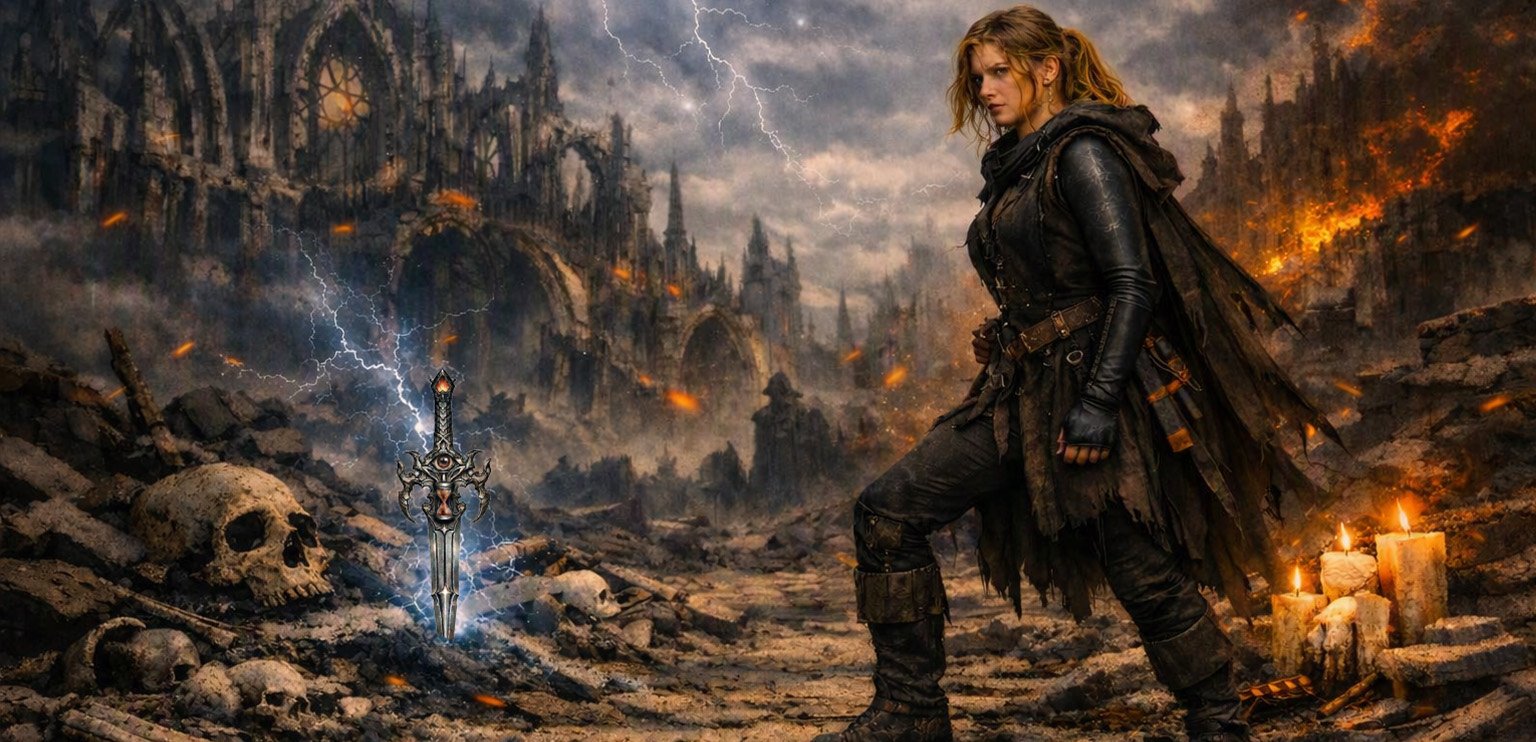
At the center of the narrative is Ysana, a young woman thrust into a sprawling war against a tyrannical empire of the dead after discovering a reality-warping artifact: the Wyrdglass Dagger.
Here is a closer look at what makes the worldbuilding of Necrocracy so uniquely terrifying and immersive.
The Currency of Mortality: Understanding “The Tithe”
In many fantasy settings, casting a spell requires a bit of muttered Latin or a drained mana bar. In Necrocracy, magic is fiercely biological.
The Cost: Boneweaving—an internal magic where practitioners draw power directly from their own skeletons—exacts a brutal physical toll known as The Tithe.
The Consequences: High-level casting causes spines to arch and crack, blood to pour from the nose, and skin to shrivel to a skeletal husk. If a Boneweaver cannot feed the spell an enemy, the magic feeds directly on the caster.
Boneweavers vs. Necromancers: Architects vs. Puppeteers
One of the most fascinating lore distinctions in the novel is the rigid hierarchy of death-magic practitioners:
Necromancers (The Parasites): They operate on the surface of death, using external rituals, blood sacrifices, and robes heavy with chaotic white sigils to force a false spark into a corpse. They are viewed as cowardly puppeteers.
Boneweavers (The Architects): They are a rare, ancient caste. Rather than wearing power on cloth, they are the power—bearing silver constellations and sigils etched directly into their skin and bones. They don’t just animate bodies; they reshape anatomy and unmake reality.
The Wyrdglass Dagger: A Sentient Artifact
Weapons in dark fantasy are often just sharp pieces of steel with fancy names. The Wyrdglass Dagger is different. It is a sentient, three-part artifact forged through a grim pact. Operating on a system of magical gravity governed by an hourglass within its hilt, it allows its wielder to execute The Ascent—an act of absolute reality revision that doesn’t just kill targets, but completely erases them from existence.
Erasure Sickness and the Memory Scar
When a being is unmade by high-tier magic, they aren’t just dead—they are scrubbed from the loom of history. This creates a psychological horror element called Erasure Sickness:
Witnesses suffer immediate memory loss of the victim, leading to physical symptoms like vice-like headaches, cranial pressure, and nosebleeds as their minds desperately rationalize the void.
Only the wielder retains the memory, bearing the crushing, isolated burden of truth alone.
Why Read Necrocracy: Forsaken Guardian?
If you are tired of cookie-cutter fantasy tropes and crave a narrative driven by visceral prose, sensory-first worldbuilding (where you can smell the ozone, taste the copper and ash, and feel the marrow-grind), and deeply flawed, resilient characters, Necrocracy delivers. It is a stark reminder that some vows are forged in fire, while others are sealed in bone and ash.
Joe Sarkic writes award‑winning grimdark fantasy and science fiction, crafting atmospheric tales of haunted realms, fractured megacities, and the people who survive them. Step into Veil of Dawn’s Promise and Necrocracy: Forsaken Guardian to explore worlds where both sorcery and technology demand a price.
Join My World